Projects we built and that run today: for a chamber of commerce, for two restaurants, for a GPU cloud, and for our own companies.
Selected work
Real work. Real-world problems.
From a community-wide digital experience to day-to-day business operations, we build around the people using the technology.
Hospitality · Online ordering
Alimentari Viger
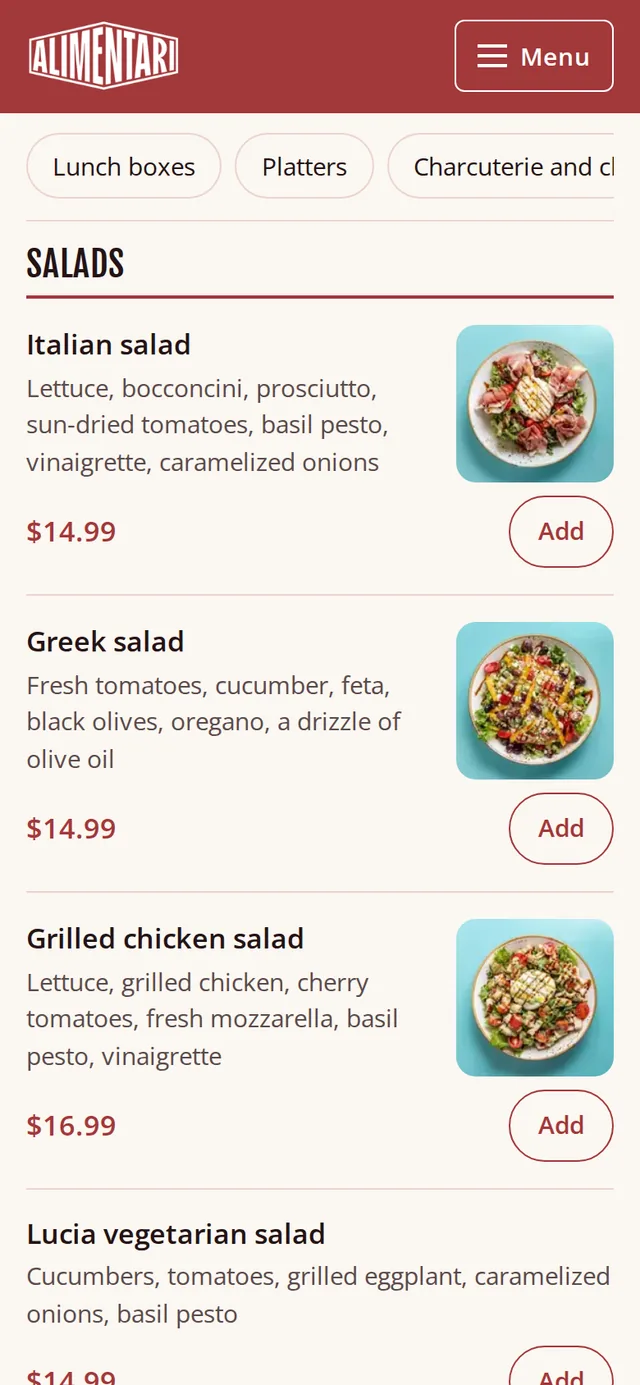
Lunch boxes and platters ordered on the shop’s own site: no phone call to take, no ordering platform taking a cut. Customers choose a pickup time and collect at the counter.
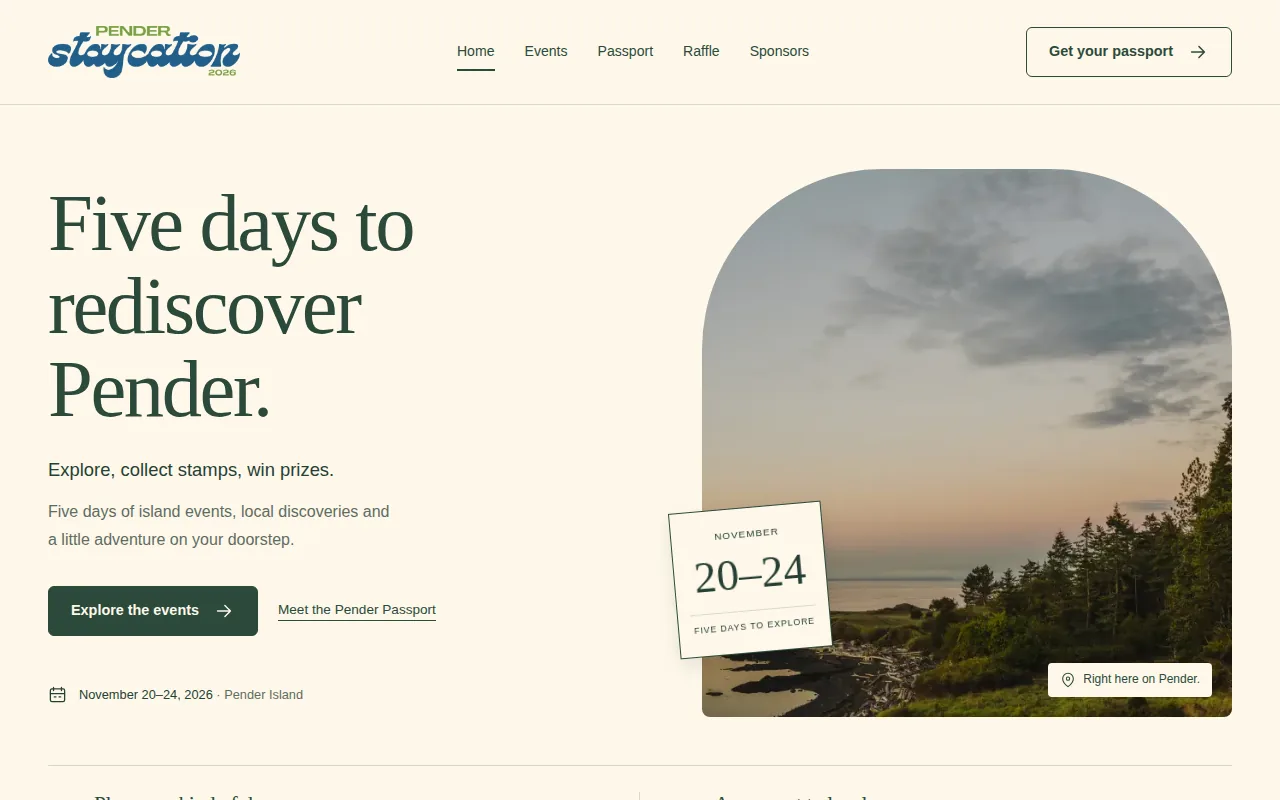
Residents and visitors find every event and follow the passport from shop to shop, on their phone. Volunteers keep it current themselves, and hosting costs the Chamber nothing.
When the terrace closes, the business doesn’t. The site switches to Christmas parties and groups in French and English, requests come in online, and each one lands on the list where the quote gets written.
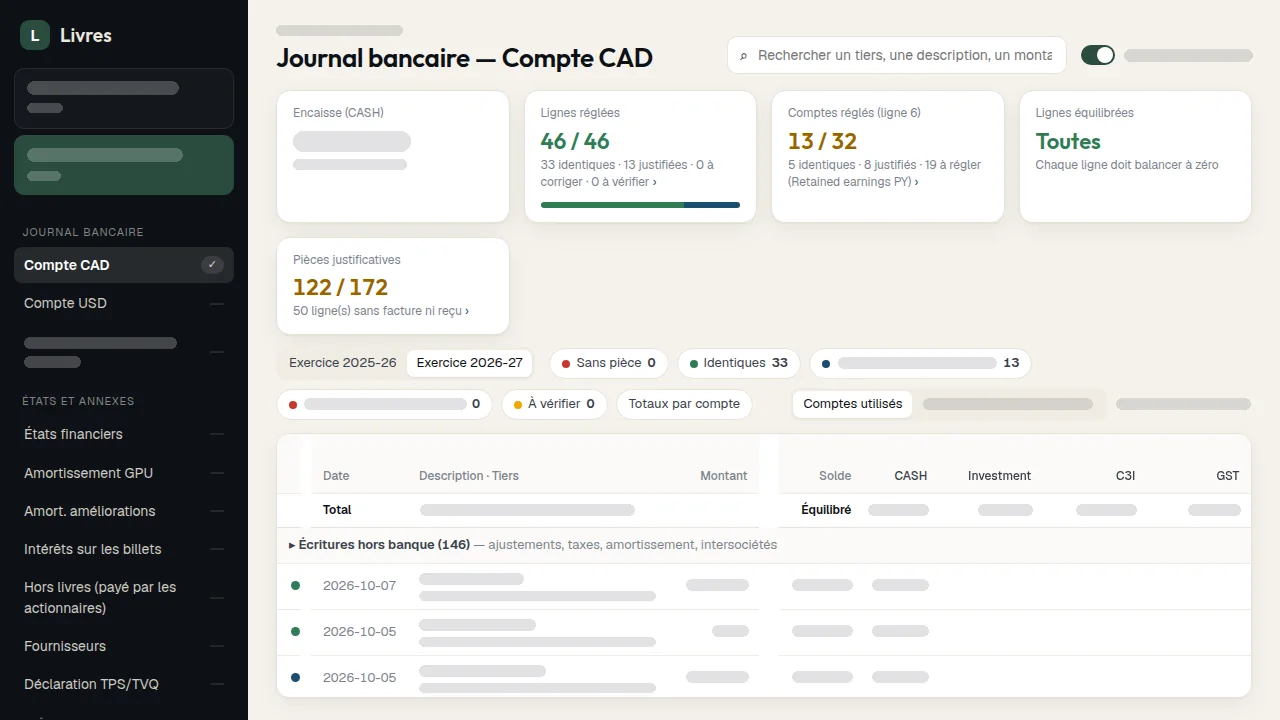
The entry is drafted with the taxes split out and the document attached, and a person approves it. Month-end stops being a hunt for paper: what is missing stays on a list until someone closes it. We run our own six companies this way.
Infrastructure · ExducerAI
Run a datacenter from a browser.
Built for ExducerAI, where our founder leads the product. Each tool replaces a drive to the datacenter, a spreadsheet or a guess.
GPU cloud · Fleet manager
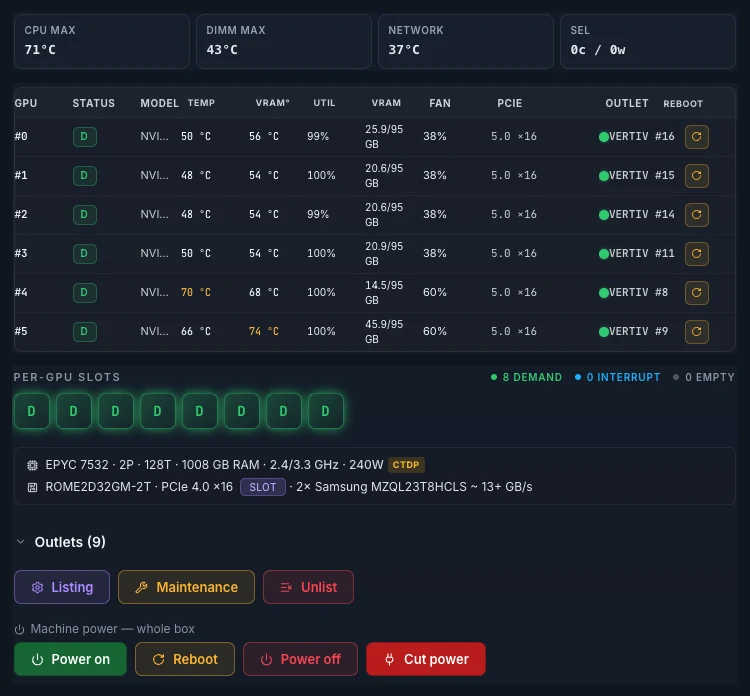
Fix one GPU without a trip to the datacenter
When a GPU acts up you see which one, with its temperature, memory and load, and restart it on its own. Maintenance, listing and power for the whole machine sit right below, so a problem is handled from wherever you are.
Datacenter · Console
The whole site on one screen
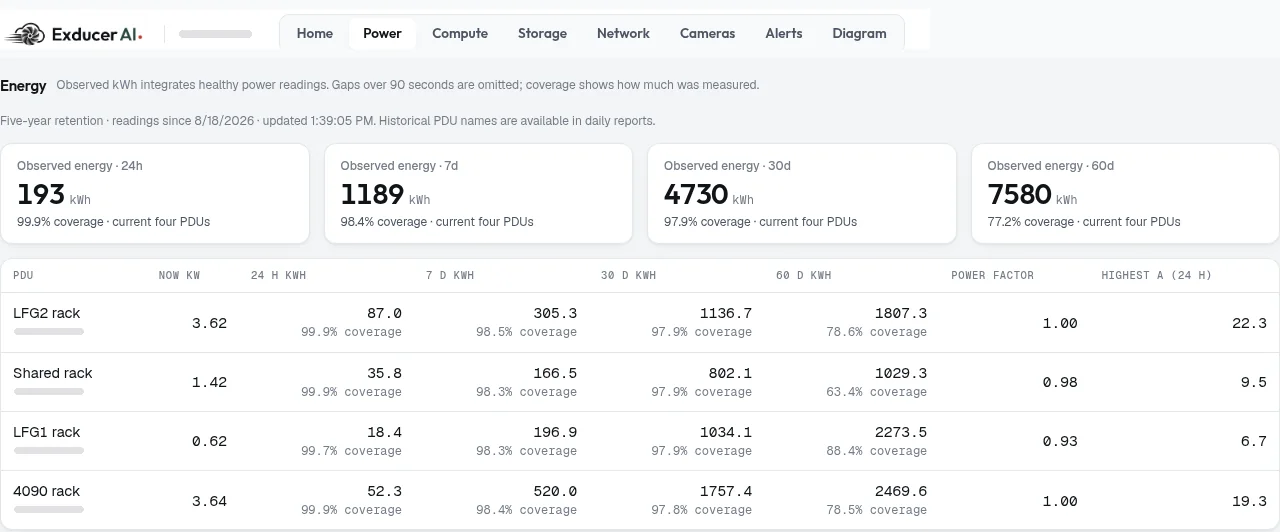
Power, servers, storage, network, cameras and alerts sit in one console instead of a tool for each, so whoever is on call sees at once whether something needs them. Energy is measured per rack and kept for five years.
Energy · Power explorer
Know what each machine costs to run
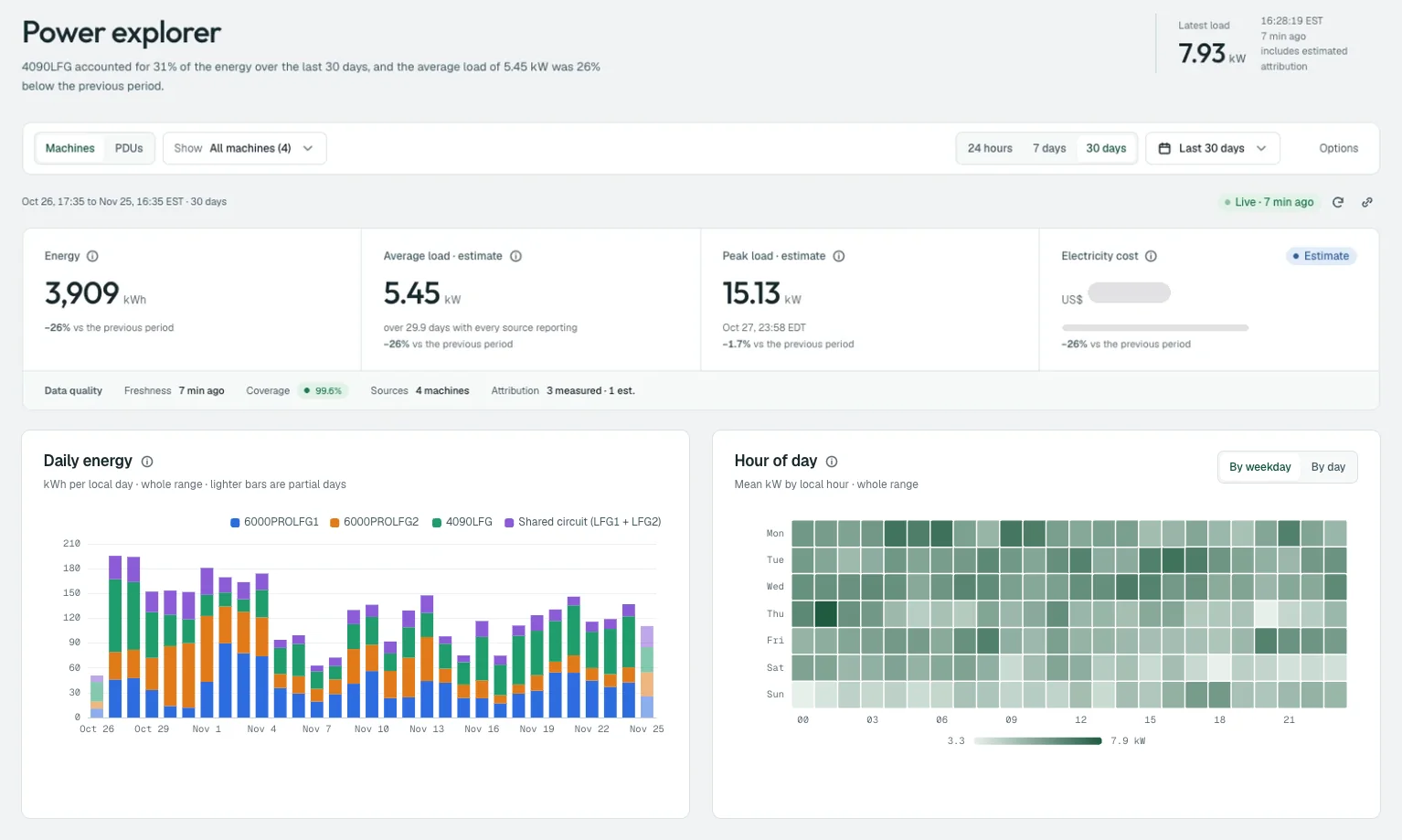
Wall power is read every minute for each machine, so the electricity bill stops being one number. You see which machine used what and at what hour, and what it earned against what it cost to power.
Network · Router and traffic explorer
Find the slow link at a glance
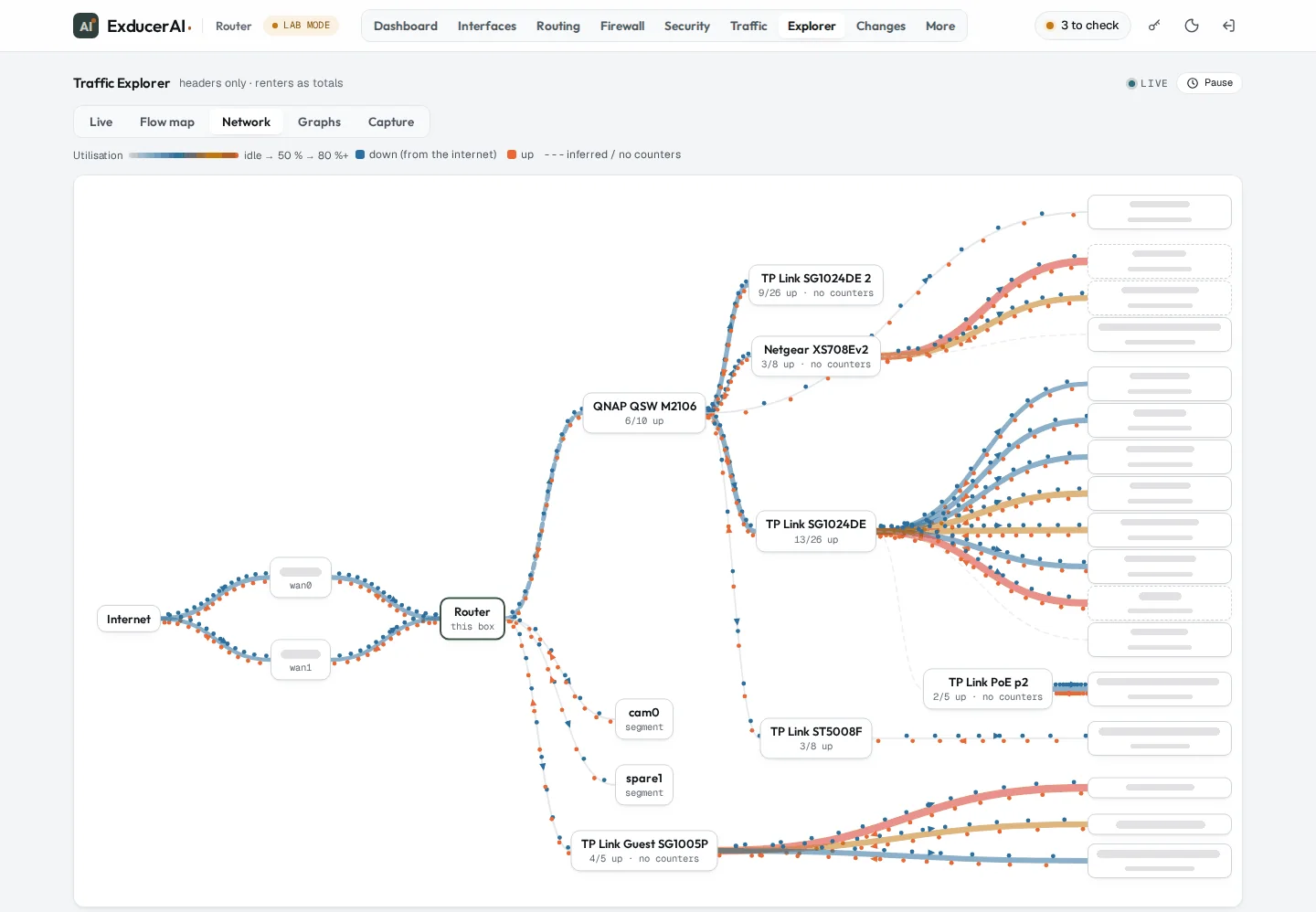
The network is drawn as a live map with the packets moving on every link, so a saturated line or a silent machine shows itself. Changes are staged and undo themselves if they fail, so a bad change does not stay in place.
Pender Island Chamber of Commerce
Pender Staycation, 20 to 24 November 2026: five days built to send residents and visitors into local shops, with events, a passport, a raffle and sponsors. The Chamber runs it without a web agency: its volunteers keep the site up themselves.
Pender Staycation · Pender Island Chamber of Commerce · 20–24 Nov 2026Measured
Events listedeach entered by a volunteer, through a form
51
Passport stopsmember businesses, with their hours for each day
24
Hosting billit runs on a free plan, in the Chamber’s own account
$0
It costs the Chamber nothing to host and there is no one to call for a change: it runs as one small program in the Chamber’s own account, volunteers edit through forms, every save can be undone, and the guide written for them is on the site itself.
A restaurant and event venue in Montréal’s Old Port. Nobody types a booking twice: guests book online, the floor works from its own service screen, and group requests, quotes and reservations pass between the booking system and the CRM every minute.
An AI assistant can only recommend a restaurant it can read. On 24 November 2026 we asked for the site the way each AI crawler does. Four of the six were refused.
GET https://marchedeseclusiers.com/Measured
Crawler
24 Nov
25 Nov
GPTBotOpenAI, to train its models
403
200
ClaudeBotAnthropic, to train its models
403
200
PerplexityBotPerplexity, to build its answers
403
200
CCBotCommon Crawl, an open archive many models learn from
403
200
OAI-SearchBotChatGPT’s search
200
200
Claude-SearchBotClaude’s search
200
200
200 means served, 403 means refused. Each request carried the crawler’s own name. It was one switch in front of the site. Nothing on the site itself showed it.
Since then: a wedding page, so couples planning next year find a venue that hosts up to 400 guests, and English pages tied to their French twins, so each visitor lands in their own language.
The terrace closes in the fall and the restaurant takes groups only. The site changes with the season, so a winter visitor sees what can be booked now: the home page becomes the Christmas party offer, in French and in English, with the group request one tap away.
Nothing is lost for next summer. The wedding and terrace pages stay online all winter, so couples planning next year and people searching for a terrace in the Old Port still find the Marché.
An order placed on a phone: a lunch box goes into the cart, the taxes are worked out, a pickup time is chosen.
An Italian shop and caterer in downtown Montréal. Orders come in on the shop’s own site, with no phone call to take and no ordering platform taking a cut, and customers pick up at the counter. Menu, prices and hours come from one source, so a change is made once.
Its opening hours were nowhere on the site while three directories gave three versions. One table of hours now feeds the footer, the contact blocks and the data machines read, so they cannot disagree.
The shop takes orders online and stays on the right side of Law 25. A kit came with the ordering: a privacy policy that says what the site really does, the notices shown when information is collected, and a tool to export or erase one person’s data.
A wrong price is stopped before a customer sees it. On both restaurant sites, 592 automated checks run before each release, and one stops the release if a page gives a price that is not on the menu.
Month-end is a checklist, not a hunt. The books of our six companies are kept on the same system we install for clients: receipts attached to the entries, each closing task with a name on it, and anything missing or unexplained on a list until someone closes it.
A real screen from our own books: lines reconciled, supporting documents attached, what is still open.
Infrastructure at ExducerAI
ExducerAI rents GPU servers by the hour. An hour a server is down or mispriced is an hour not sold, so the tools built for it do two things: show a problem early, and let it be fixed from anywhere.
Fix one GPU without a trip to the datacenter
When a GPU acts up you see which one, with its temperature, memory and load, and restart it on its own. Maintenance, listing and power for the whole machine sit right below, so a problem is handled from wherever you are.
The whole site on one screen
Power, servers, storage, network, cameras and alerts sit in one console instead of a tool for each, so whoever is on call sees at once whether something needs them. Energy is measured per rack and kept for five years.
Know what each machine costs to run
Wall power is read every minute for each machine, so the electricity bill stops being one number. You see which machine used what and at what hour, and what it earned against what it cost to power.
Find the slow link at a glance
The network is drawn as a live map with the packets moving on every link, so a saturated line or a silent machine shows itself. Changes are staged and undo themselves if they fail, so a bad change does not stay in place.
Where the experience comes from
The person who builds your workflow has done it where a mistake is expensive. Our founder ran the document-verification product at a global identity-verification company for almost eight years. Letting the clear cases through and sending the unclear ones to a person raised automated verifications by about 75% and cut manual reviews by about 70%. A decision that took about 195 seconds came down to 14.
At ExducerAI he took a GPU cloud from nothing to paying customers and put more than 25 systems into production in six months. That is the pace we bring to your project.
Start a conversation
What could work better?
Tell us what slows your team down. We'll start with the problem, not a sales pitch.